
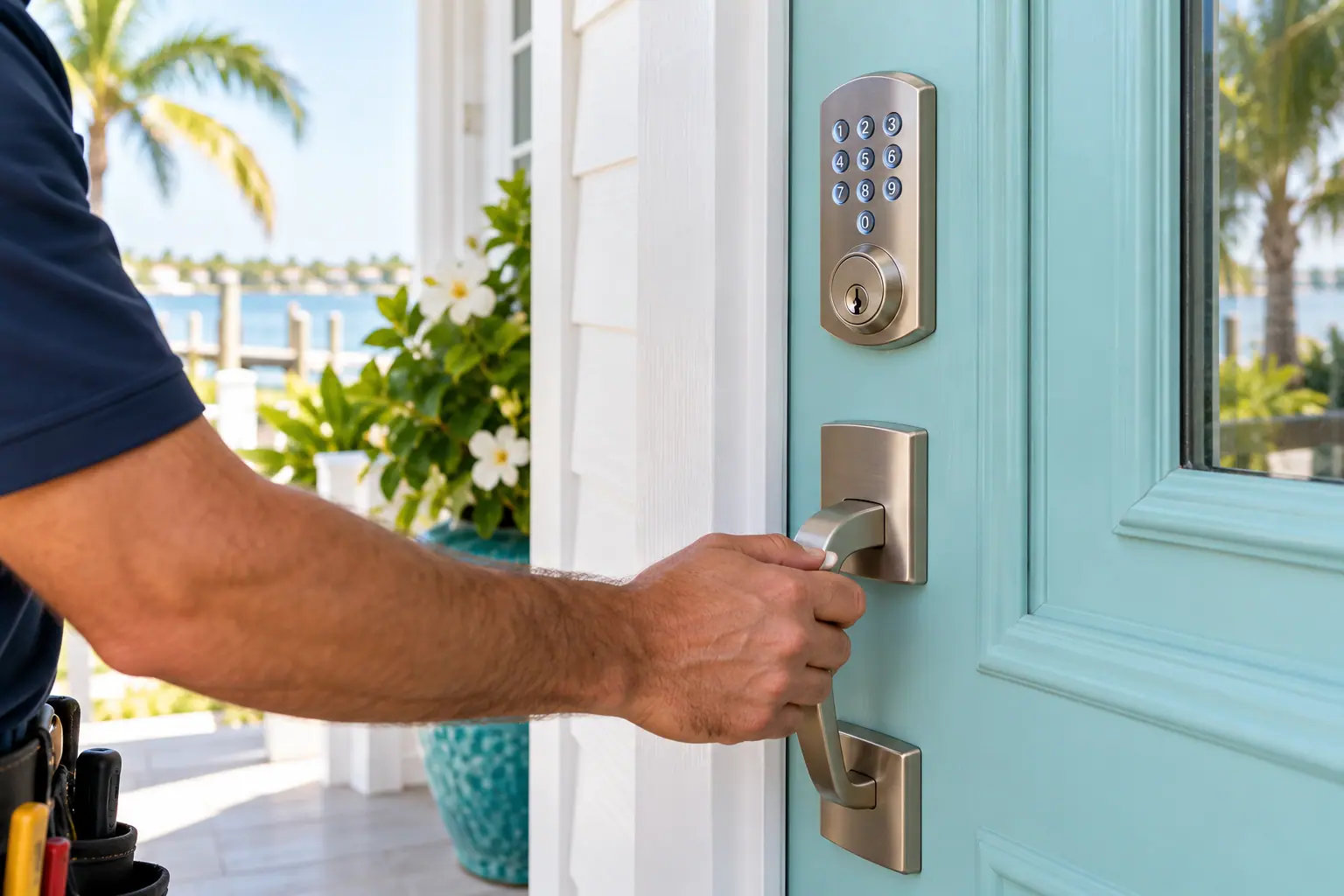
Choose around the door and the people using it
Before buying a device, check what type of door and lock you have. Fit, clearance and the existing holes matter, as does how smoothly the door closes and latches. Tell us whether the property is your home, a rental or a business, and who will use the entrance. Different users may need different access arrangements. A keypad, an app-controlled device and a mechanically keyed lock offer different experiences; a higher feature count is not automatically a better fit.
Installation is one part of the setup
The hardware needs to operate correctly with the door. Electronic functions also depend on the particular product, its batteries, settings and any network or account requirements. Share the model you are considering so the installation request can be discussed before the visit. If a landlord or association controls the door hardware, obtain approval first. We do not assume that every smart lock works with every door, platform or existing access system simply because it is sold as a replacement deadbolt.
Keep access understandable after installation
Decide who owns the device account, who can change codes and how backup access will work. For a rental, that usually means coordinating with the owner or manager rather than leaving responsibility unclear between guests. Keep the manufacturer’s instructions available and plan routine battery checks. If an existing smart lock stops opening the door, describe the symptoms and whether the mechanical backup works. The issue may involve the door or hardware rather than an account or software setting.